
CRAFT NOTE · KATU TEXTILES
Katu Weaving Workshop
The weaving workshop makes the time inside a Katu textile visible: posture, backstrap tension, repeated movements and patient instruction matter more than producing a souvenir quickly.
- 01The first lesson is physical before it becomes decorative
- 02Backstrap tension and beadwork make the tradition recognisable
- 03Host details matter more here than a generic opening time
- 04Do not reduce a living textile tradition to a staged village photograph
Four hours at the loom can explain more than four minutes in front of a textile stall.
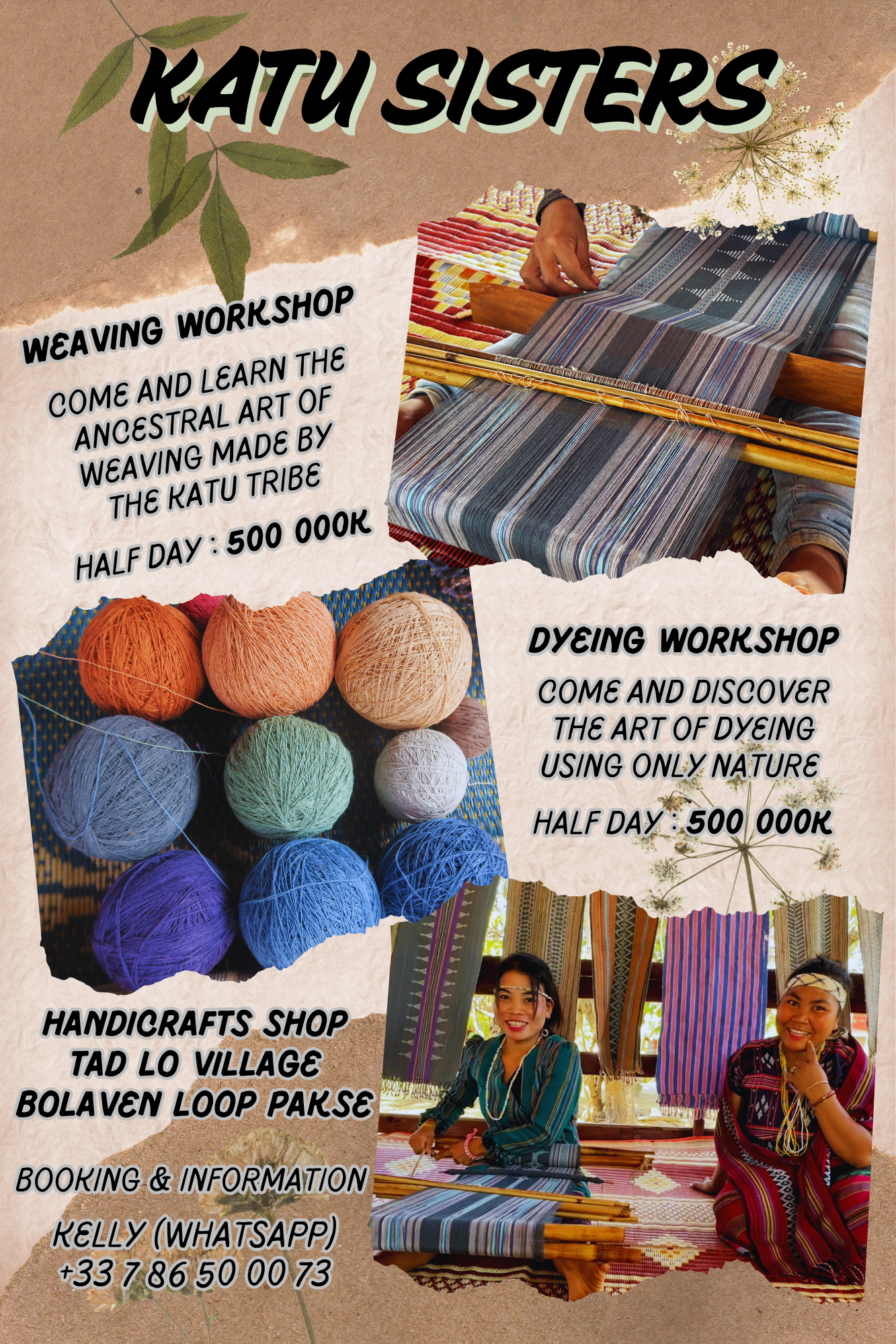
01 · SIT WITH THE LOOM
The first lesson is physical before it becomes decorative
Visit Tad Lo currently describes the workshop as roughly four hours and notes that the sitting posture and flexibility required can be uncomfortable for some guests. That is not a minor practical warning; it helps explain the craft itself. Katu weaving traditionally uses a foot-braced backstrap loom. The weaver sits low, the loom is tensioned against the body, and the legs and feet actively help control the warp. Unlike watching someone weave for five minutes at a market, trying the posture makes the time inside a handmade textile immediately visible. Arrive expecting a patient workshop rather than a quick demonstration, and tell the host if a floor-seated position is difficult for you.
Before the pattern, learn where the tension comes from.
02 · KATU TECHNIQUE
Backstrap tension and beadwork make the tradition recognisable
The Traditional Arts and Ethnology Centre and Ock Pop Tok both document Katu women in Salavan and neighbouring southern provinces using backstrap looms, often with the feet helping maintain tension. Katu textiles are particularly known for bead decoration incorporated into woven cloth, alongside cotton, natural fibres and strong geometric or nature-linked motifs. That wider context belongs on the page because it explains why the workshop is more than making a souvenir. But it should not be used to invent what a particular Tad Lo host will teach on a particular day. The exact project, colours, fibres and amount of beadwork should be left to the current workshop rather than promised by Atlas.
Explain the tradition broadly; let the actual host define today’s piece.
03 · BOOK THE PERSON, NOT JUST THE SLOT
Host details matter more here than a generic opening time
The workshop is listed as walkable from Tad Lo, booking required and potentially less available in low season. Visit Tad Lo still marks the exact host group, price, contact and some cultural terminology for confirmation. That means the correct planning behaviour is to arrange the session locally rather than publish a fixed daily timetable that may outlive the person offering it. Ask how long the session will be, what you will actually make, whether materials are included and whether the workshop is suitable for children or anyone with limited hip, knee or back mobility.
Four hours at the loom can explain more than four minutes in front of a textile stall.
04 · CULTURAL EXCHANGE
Do not reduce a living textile tradition to a staged village photograph
A workshop creates a useful exchange because the activity has a clear purpose: someone teaches, someone learns, and the time of the craft is recognised. Keep that structure respectful. Ask before photographing the host closely, especially when the workshop takes place at a home or community space. Buying finished work can support the maker, but bargaining should not ignore the hours contained in a handwoven piece. If the host explains motifs, family practice or local identity, treat those explanations as their perspective rather than a universal statement about every Katu community.
FIELD NOTE · BEFORE YOU LEAVE
What matters more than another pin
The weaving workshop makes the time inside a Katu textile visible: posture, backstrap tension, repeated movements and patient instruction matter more than producing a souvenir quickly.
Four hours at the loom can explain more than four minutes in front of a textile stall.
PLAN THE VISIT
Katu Weaving Workshop, practically
The useful details in one place before you leave Tad Lo.
Workshop length
Visit Tad Lo currently describes roughly four hours learning posture, technique and the time involved in handmade textiles.
Technique context
Katu women in southern Laos are known for foot-braced backstrap weaving, often including beads in woven cloth. The exact piece and techniques taught in Tad Lo should be confirmed with the host.
Booking
Advance organisation is required. Host group, price, exact meeting point and current contact still need local confirmation.
Availability
Low-season availability can be lower, so do not assume a daily fixed schedule.
Physical note
The traditional seated position and loom tension can be demanding despite the low overall activity level.
Respect
Ask before photographing the host, home or community setting and treat cultural explanations as the host’s perspective rather than a universal statement about every Katu community.
QUESTIONS BEFORE GOING
Katu Weaving Workshop, without the guesswork
Short answers built from the practical field information already attached to this landmark.
Workshop length?
Visit Tad Lo currently describes roughly four hours learning posture, technique and the time involved in handmade textiles.
Technique context?
Katu women in southern Laos are known for foot-braced backstrap weaving, often including beads in woven cloth. The exact piece and techniques taught in Tad Lo should be confirmed with the host.
Booking?
Advance organisation is required. Host group, price, exact meeting point and current contact still need local confirmation.
Availability?
Low-season availability can be lower, so do not assume a daily fixed schedule.
Physical note?
The traditional seated position and loom tension can be demanding despite the low overall activity level.
KEEP EXPLORING LAOS
Where does the road go next?
Four other field notes that connect naturally with this part of the trip.



Field note method. Wikipedia is used as a research starting point for history and geography when a relevant article exists. Facts are checked against official, local or specialist sources where possible. Independent travel blogs and field reports are used to identify practical questions, recurring observations and traveller perspective; their wording is not copied.
Sources & photo licences
Source links for this field note are being consolidated.
Photo author, Wikimedia Commons attribution, licence and the exact file source are also shown directly under each Commons image.
KEEP IT IN THE NOTEBOOK
Save Katu Weaving Workshop for the road.
Add this landmark to your trip now, or open the map when you are ready to work out the route.