
COFFEE NOTE · NEAR LAONGAM
Coffee from Tree to Cup with Mr Vieng
Mr Vieng is the compact producer visit: follow the coffee chain from plant to processing and cup, then read whatever stage of the agricultural season the farm is actually showing that day.
- 01Keep the visit focused on the chain behind one cup
- 02A coffee farm shows a different process at different times of year
- 03This is a road stop, not a walkable village activity
- 04Use recent prices only as orientation
The useful question is not only how the coffee is roasted, but what stage the farm is in today.
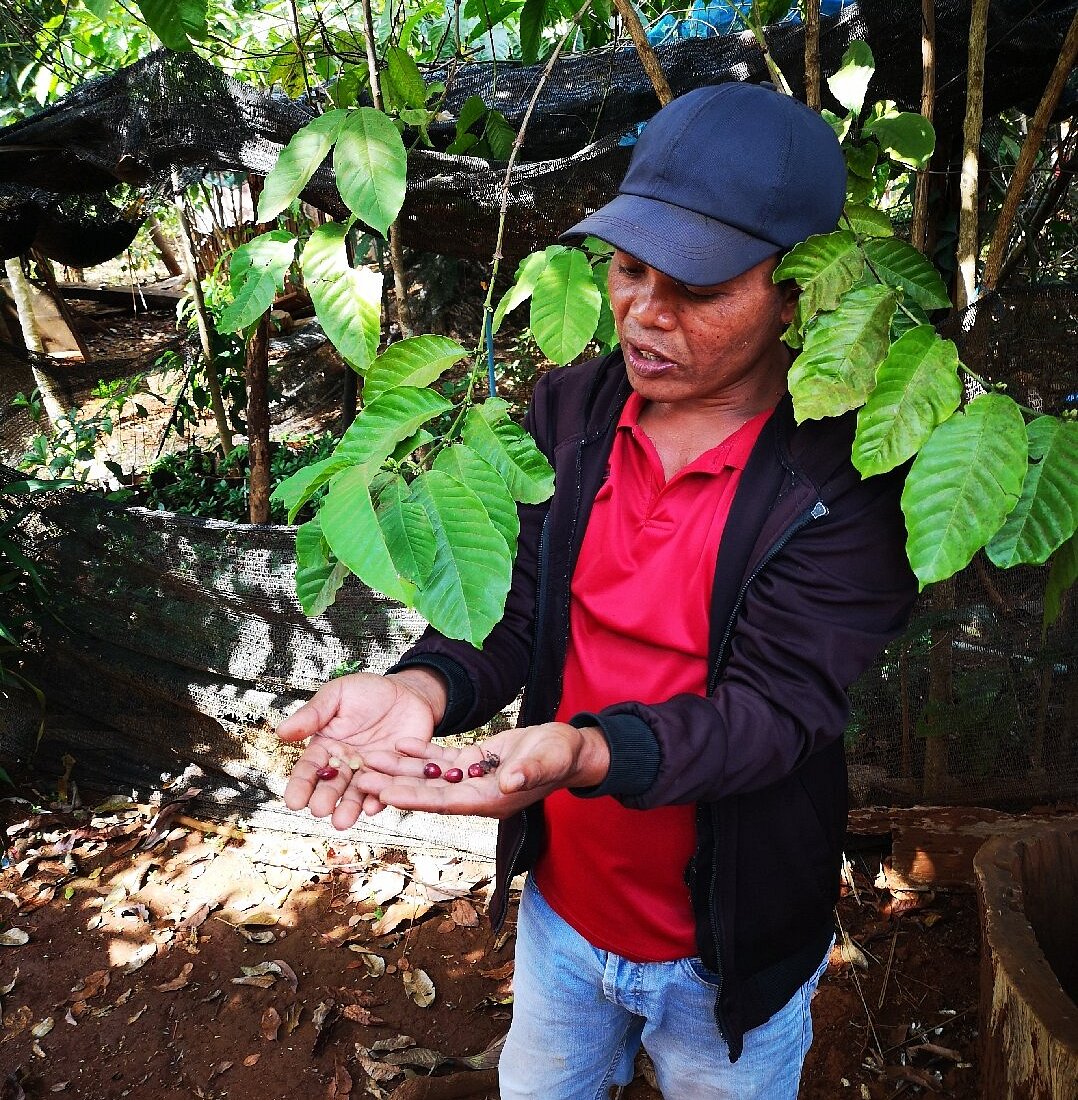
01 · TREE TO CUP
Keep the visit focused on the chain behind one cup
Visit Tad Lo describes the experience as approximately ninety minutes, moving from coffee trees through processing and preparation. Recent traveller reviews from late 2024 describe a similar one-hour to ninety-minute guided format and a small producer setting rather than a polished visitor centre. That compactness is the strength of the stop. Look at the plant, fruit, drying or processing stages available that day, then connect those steps with the cup at the end. The exact demonstration naturally depends on what stage of production is happening when you arrive.
Ninety minutes is enough when every step points back to the same bean.
02 · SEASON
A coffee farm shows a different process at different times of year
The Bolaven Plateau coffee cycle changes visibly across the year. Laos Coffee identifies the start of the main coffee season around November, with Arabica commonly harvested roughly October to January and Robusta roughly December to February; other agricultural references describe cherries ripening into the first months of the year depending on variety and microclimate. That means a visitor in harvest months may see ripe cherries and active processing, while another traveller may see flowering, green fruit or quieter post-harvest work. Do not judge the visit by whether a staged harvest is available. Ask what the plants are doing now and let the season become part of the explanation.
03 · FROM TAD LO
This is a road stop, not a walkable village activity
Visit Tad Lo places Mr Vieng roughly thirty kilometres by road from the Tad Lo tourism office near Laongam, with motorbike, car or minivan recommended. The distance makes most sense when the visit sits inside a day already using the Bolaven road rather than as a separate out-and-back journey for one cup of coffee. Save the exact location before departure and confirm current visit times. The setting also operates as a homestay and coffee stop, so the pace can feel more domestic than scheduled-tourist-attraction.
The useful question is not only how the coffee is roasted, but what stage the farm is in today.
04 · PRICE & EXPECTATIONS
Use recent prices only as orientation
A December 2024 visitor review reported 130,000 kip per adult for the plantation and cultural explanation, while Visit Tad Lo currently leaves price and booking method to local confirmation. Atlas should therefore publish the recent figure only as an order-of-magnitude reference, never as a guaranteed ticket. Expect a simple farm visit, useful English explanation and coffee rather than luxury facilities. If you want to stay overnight, eat or buy coffee, treat those as separate choices from the ninety-minute learning experience.
FIELD NOTE · BEFORE YOU LEAVE
What matters more than another pin
Mr Vieng is the compact producer visit: follow the coffee chain from plant to processing and cup, then read whatever stage of the agricultural season the farm is actually showing that day.
The useful question is not only “how is this coffee roasted?” but “what stage is the farm in today?”
PLAN THE VISIT
Coffee from Tree to Cup with Mr Vieng, practically
The useful details in one place before you leave Tad Lo.
Experience
A compact producer visit following coffee from the tree through processing and preparation in roughly ninety minutes.
From Tad Lo
Visit Tad Lo places the stop about 30 km by road from the tourism office near Laongam. Motorbike, car or minivan is recommended.
Recent price reference
A December 2024 visitor review reported 130,000 kip per adult for the plantation and cultural explanation. Confirm the current price and booking method.
Season
The farm looks different through the coffee cycle. Bolaven Arabica is commonly harvested around October–January and Robusta around December–February, with variation by microclimate.
Time
The activity itself is short, but the road makes it most logical as part of a day already moving through the Laongam/Bolaven area.
Setting
This is a simple producer and homestay setting rather than a luxury coffee attraction. Treat accommodation, meals and coffee purchases as separate choices from the guided visit.
QUESTIONS BEFORE GOING
Coffee from Tree to Cup with Mr Vieng, without the guesswork
Short answers built from the practical field information already attached to this landmark.
Experience?
A compact producer visit following coffee from the tree through processing and preparation in roughly ninety minutes.
From Tad Lo?
Visit Tad Lo places the stop about 30 km by road from the tourism office near Laongam. Motorbike, car or minivan is recommended.
Recent price reference?
A December 2024 visitor review reported 130,000 kip per adult for the plantation and cultural explanation. Confirm the current price and booking method.
Season?
The farm looks different through the coffee cycle. Bolaven Arabica is commonly harvested around October–January and Robusta around December–February, with variation by microclimate.
Time?
The activity itself is short, but the road makes it most logical as part of a day already moving through the Laongam/Bolaven area.
KEEP EXPLORING LAOS
Where does the road go next?
Four other field notes that connect naturally with this part of the trip.


Field note method. Wikipedia is used as a research starting point for history and geography when a relevant article exists. Facts are checked against official, local or specialist sources where possible. Independent travel blogs and field reports are used to identify practical questions, recurring observations and traveller perspective; their wording is not copied.
Sources & photo licences
Source links for this field note are being consolidated.
Photo author, Wikimedia Commons attribution, licence and the exact file source are also shown directly under each Commons image.
KEEP IT IN THE NOTEBOOK
Save Coffee from Tree to Cup with Mr Vieng for the road.
Add this landmark to your trip now, or open the map when you are ready to work out the route.